#1
Maritime Supply Chain SaaS
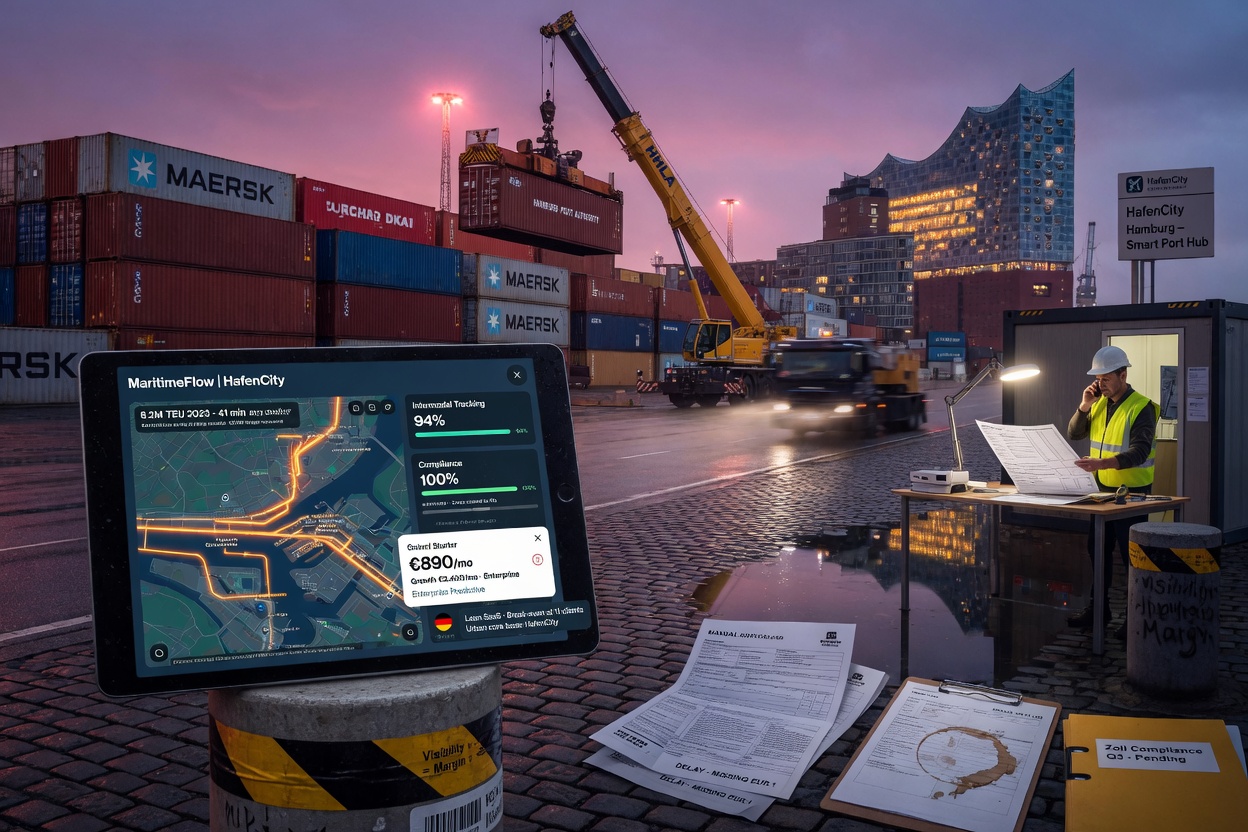
Hamburg's port moves 8.2 million TEU annually yet operators still lose time and margins on fragmented visibility, manual documentation, and compliance delays. Our Maritime Supply Chain SaaS delivers cloud-based predictive analytics, intermodal tracking, and automated compliance tools to 3PLs and forwarders on tiered subscriptions from an urban core base in HafenCity. The lean model breaks even in 5 months with €23,000 monthly profit at 51% margins on a €95,000 investment. With stable port throughput, abundant STEM talent from TU Hamburg, and a €1.1-2.4 billion maritime professional services SAM showing 2.2-4.2% growth, now is the right time to capture recurring revenue in this location.
- Startup
- $250K
- Monthly profit
- $60K
- Margin
- 52%
- Breakeven
- —