Executive summary
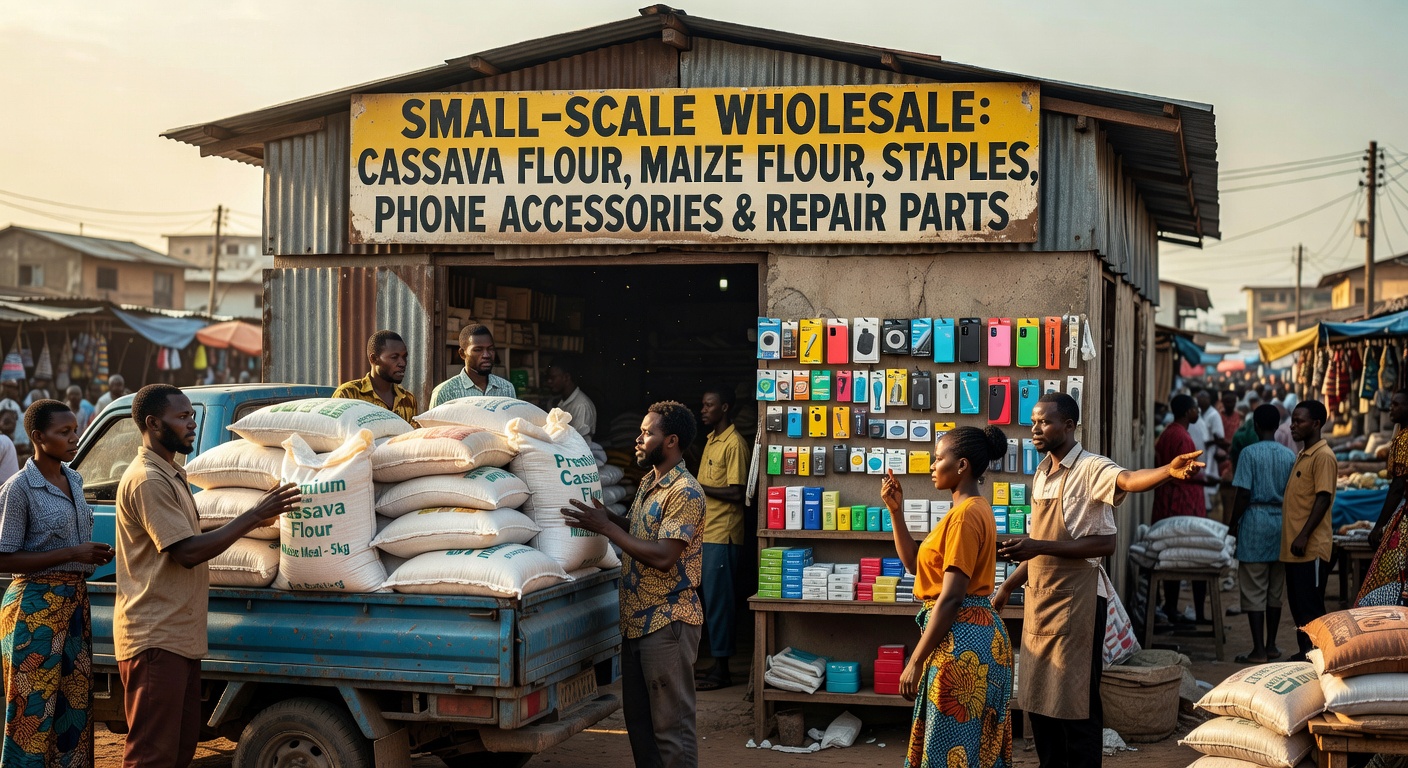
Kinshasa's population of approximately 18.9 million (2026 projection from INS, UN, and World Bank data) is young (median age 19.1), rapidly urbanizing at 3.8-4.2% annually, and heavily informal (72% of employment). Median household income of $2,650 drives extreme price sensitivity alongside strong demand for staples, reliable delivery, skills development, repairs, and affordable wholesale goods. Infrastructure gaps (power outages, congestion, Matadi port delays) and low-to-medium saturation in targeted categories create viable entry points. GDP growth of 4.8% supports construction, food distribution, and services. With a strict $25,000 upfront budget, the highest-potential commercially viable opportunities are small-scale, high-turnover operations that leverage peri-urban land, existing motorcycle fleets, dense foot traffic, mobile money (85%+ penetration), and local networks. These prioritize quick cash cycles, low fixed assets, and B2B/B2C relationships in fragmented markets. The top five span agriculture, logistics, education, repair services, and wholesale trade.
Financial outlook: Break-even tiers for the five opportunities require $18,500-$23,500 in startup capital, delivering monthly revenues of $5,750-$14,500, profits of $1,950-$3,300, and margins of 23-57%, with break-even reached in 6-12 months. Optimal tiers ($35,000-$67,500 investment) increase monthly profits to $5,900-$11,900 at 32-58% margins. Aggregate first-year revenue potential across a diversified portfol